

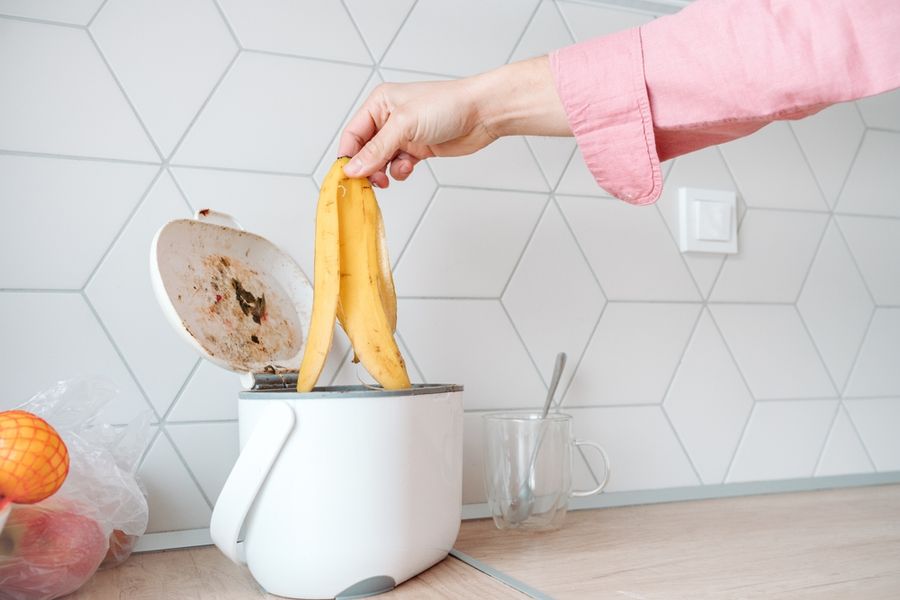
Food scraps can make an ordinary trash can smell unpleasant long before collection day. Countertop composters and food recyclers offer a cleaner way to manage peels, leftovers, coffee grounds, and other kitchen waste without maintaining a traditional outdoor pile. Modern appliances do not all produce the same material, however. Some dry and grind scraps into a reduced-volume output, while others use processing modes intended to create a soil amendment. Understanding that difference is essential before choosing a machine.
Understand What the Machine Produces
“Countertop composter” is a broad retail label rather than a guarantee that finished compost emerges after every cycle. Some machines primarily heat, dry, and grind food waste. Lomi 3 turns scraps into a material called Lomi Earth, which is distinct from finished compost, while the Vitamix Eco 5 produces a fine, dry powder.
That distinction affects disposal and garden use. Dry output can occupy less room in a trash or municipal organics bin, while pre-compost and soil-amendment materials require product-specific handling. Read the directions for acceptable scraps and final use instead of assuming every output can go directly around plants.
Lomi 3 Offers Several Processing Options
The Lomi 3 has a 3-liter bucket and measures 11 inches wide, 11 inches deep, and 12 inches high. Express Mode runs for three to six hours, Grow Mode takes 11 to 17 hours, and a separate cleaning cycle lasts about 90 minutes. Its process combines heating, grinding, moisture and temperature monitoring, airflow, and dual-filter odor control.
The model accepts fruits and vegetables, meats and dairy, breads and grains, and some yard waste. Its output is pre-compost rather than finished compost. That makes it a practical fit for households that want a compact machine with several cycle choices and are prepared to follow the specified directions for handling the result.
Vitamix Eco 5 Handles Larger Batches
The FoodCycler by Vitamix Eco 5 uses an approximately 5-liter bucket and reduces food-waste volume by as much as 90 percent. It breaks scraps into a fine, dry powder through an eight-phase cycle and can be placed on a counter, in a pantry, or in a garage.
Its carbon filter can be refilled with replacement pellets instead of requiring the entire filter housing to be discarded. The appliance measures 13.5 by 10.9 by 13.8 inches and weighs approximately 30 pounds. The larger capacity may suit households that cook frequently, although the weight makes it less convenient to move between storage and the counter.
Airthereal Revive R500 Prioritizes Simple Cleanup
The Airthereal Revive R500 uses a 2.5-liter bucket, one-button operation, biodegradable carbon filters, and a blade designed to crush scraps from multiple angles. Its listed processing range is two to seven hours, with a quick cycle of about four hours.
The removable bucket is dishwasher-safe, which simplifies deeper cleaning after sticky or strongly scented loads. The unit measures 12.5 by 10 by 12.5 inches and turns scraps into a dry powder. Its smaller capacity may work best for lighter daily waste or users who prefer frequent cycles instead of storing scraps for several days.
Vego Kitchen Composter Adds Specialized Modes
The Vego Kitchen Composter has a 4-liter volume, holds up to 3.3 pounds of kitchen waste per load, and measures 14.37 by 11.22 by 12.64 inches. It includes Bluetooth and Wi-Fi connectivity, app monitoring, activated-carbon odor control, and a built-in weighing system that adjusts processing time according to the load.
Its modes produce different outputs. Express Mode dries and grinds scraps in two to eight hours, while the longer Vego, Fertilize, and Grass modes are intended for different garden applications. This flexibility suits households that want control over whether the output is stored, added to a compost pile, or prepared for outdoor use.
Match Capacity to Daily Habits
Measure the counter before comparing features, including the overhead clearance needed to open the lid and remove the bucket. Capacity should reflect the amount of waste produced between cycles, not simply the largest model available. A smaller bucket may handle vegetable trimmings and coffee grounds, while frequent cooking can fill it quickly.
Also compare permitted materials, cycle length, filter maintenance, noise, power requirements, and cleaning instructions. Bones, fibrous peels, liquids, oils, and large pits may be handled differently by each machine. A useful appliance is one whose loading rules and upkeep fit the household’s normal routine.
Reduce Waste With Realistic Expectations
Countertop composters can reduce the volume, moisture, and odor associated with kitchen scraps, but they are not interchangeable. Lomi 3 emphasizes compact dimensions and multiple cycles, the Eco 5 provides a larger bucket, the Revive R500 offers straightforward operation and dishwasher-safe cleanup, and the Vego model supplies several output-focused modes.
Choose according to what should happen after each cycle. Whether the goal is easier trash handling, municipal organics collection, faster outdoor composting, or a garden amendment, the final material needs a clear destination. That plan determines whether the appliance becomes a useful part of the kitchen or another machine occupying valuable counter space.