

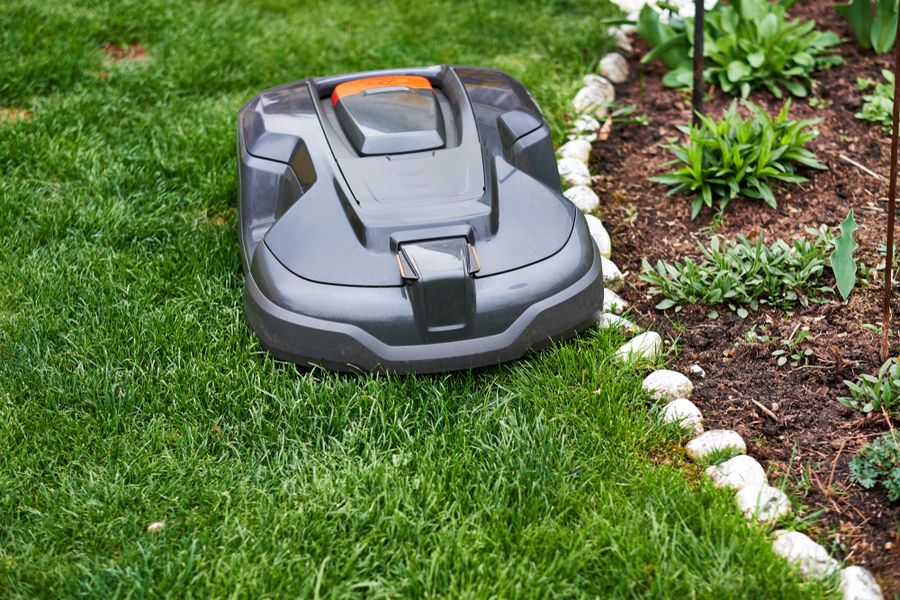
A small lawn may not take long to mow, yet it still demands regular attention throughout the growing season. Robotic lawn mowers replace occasional full cuts with frequent, light trimming, allowing the machine to maintain grass on a schedule. For compact properties, that convenience can be appealing, but limited space also magnifies setup errors, awkward borders, and obstacles. Comparing navigation systems, slope capacity, charging access, and maintenance needs helps determine whether automation genuinely simplifies the yard.
The Main Advantage Is Consistent Maintenance
Many robotic mowers remove a small amount of grass during frequent passes rather than waiting for it to become tall. The fine clippings remain on the turf, and the mower returns to its charging station when it needs power.
This routine can help owners who dislike fitting a complete mowing session into every week. Scheduling makes the lawn less dependent on one free afternoon. The tradeoff is that the robot may spend more total time moving around the property than a person would spend making one fast pass. Its benefit is reduced hands-on work, not necessarily fewer operating hours.
Small-Yard Models Can Be Easier to Match
The Segway Navimow i105 is rated for 0.125 acre and uses virtual boundaries instead of perimeter wire. It supports app-based schedules and multiple mowing zones, handles slopes up to 30 percent, and offers a manual cutting-height range of 2 to 3.6 inches.
The Mammotion YUKA mini 600 is listed for up to 0.15 acre, while the 800 model is listed for up to 0.2 acre. Both use wire-free mapping, can manage as many as 15 mowing zones, and are designed for slopes up to 50 percent.
Capacity is only a starting point. A simple rectangle may be easier to cover than a smaller property divided by paths, beds, gates, or disconnected grass sections.
Wire-Free Navigation Reduces Physical Installation
Virtual-boundary mowers avoid running a cable around the perimeter. Their apps create maps, mowing zones, and restricted areas, which can make boundary changes easier. The i105 combines positioning technology with camera-assisted obstacle avoidance, while the YUKA mini uses positioning and dual-camera vision for mapping and navigation.
Wire-free does not mean setup-free. The charging station still needs electrical access, and the digital map must reflect the lawn accurately. Trees, buildings, narrow corridors, drop-offs, and unusual borders deserve attention. On a compact property, even a small mapping error may send the mower onto mulch, pavement, or another excluded area.
Boundary Wire Is Predictable but Labor Intensive
Some robotic mowers rely on a physical boundary wire placed around the lawn and areas the machine should avoid. The wire can be buried or fastened to the ground with staples. A separate guide wire may help the mower find the charging station; the Husqvarna Automower 115H requires one for its return route.
A wired layout creates a fixed operating zone, but installation takes planning. Changes to a flower bed, play area, or lawn edge may require moving or splicing the cable. Digging, edging, or landscape work can also damage the wire and interrupt operation.
Tight Edges and Clutter Remain Challenges
Raised borders, walls, fence lines, and narrow corners may prevent the cutting deck from reaching the final strip of grass. Strong edge-mowing behavior can reduce follow-up work, but occasional string trimming may still be necessary.
Small yards can also contain furniture, hoses, toys, planters, pet waste, and fallen branches. Obstacle detection helps a mower navigate, but clearing the lawn before a scheduled run protects the machine and items left outside. Lift sensors and collision responses add protection, yet they do not eliminate the need for responsible operation.
Maintenance Does Not Disappear
Automation removes most pushing, not all upkeep. Owners still need to inspect blades, clear packed clippings, clean sensors, confirm that wheels move freely, and keep the charging area accessible. Wet grass, heavy debris, or an overgrown lawn may require manual attention before normal scheduling resumes.
Replacement parts and manufacturer support deserve consideration before purchase. The mower also needs secure seasonal storage in climates where grass stops growing and freezing weather is common.
Decide Whether the Convenience Fits the Yard
Robotic lawn mowers can suit small yards when the grass area is clearly defined, the charging station has a practical location, and the owner values steady maintenance over a traditional weekly cut. Wire-free models simplify physical installation, while wired systems provide a fixed boundary that does not depend on a virtual map.
The disadvantages are practical: setup takes care, edges may still need attention, clutter must be managed, and maintenance continues. A small lawn does not make every robot suitable. The best choice is a model whose rated area, slope ability, navigation method, and cutting-height range match the property closely enough that automation removes work instead of creating a new troubleshooting routine.